
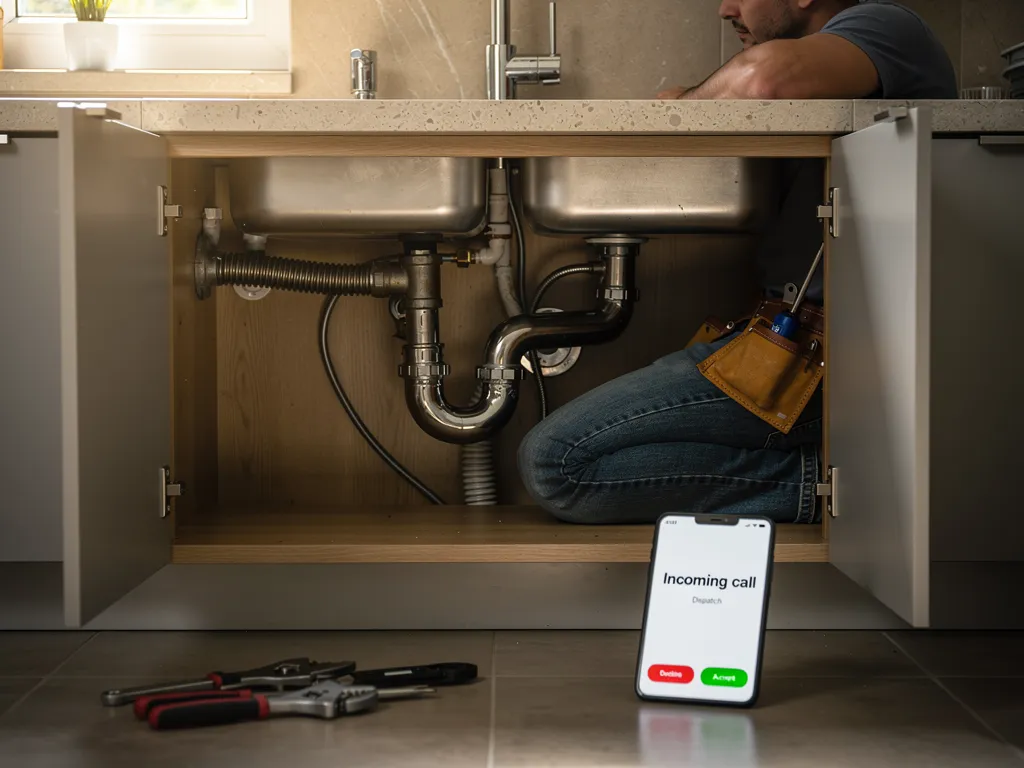
Each unanswered call risks a job to competitors. The tradeoff: human judgement versus cost and capacity.
Key Takeaways
- A missed call from a potential customer represents a direct loss of revenue and a job booked by a competitor.
- A human receptionist costs roughly $35,000 a year and handles one call at a time during standard business hours.
- A caller who reaches voicemail rarely waits five minutes before hanging up and dialing the next provider.
What does a missed call actually cost you?
A missed call from a potential customer is a direct loss of revenue. Every unanswered ring represents a job you will not book and money you will not collect. The cost of missed calls compounds quickly for home service, medical, legal, and real estate businesses where every caller is a qualified lead.
The window between first contact and a booked appointment is razor thin. Forbes reports that businesses lose billions annually to missed customer interactions. In service industries, that window closes faster than most owners realize. If a caller does not hear back within five minutes, they have already dialed your competitor. You lose the lead before you even knew it existed.
Voicemail is free. It is also where leads go to die. Most callers hang up and dial a competitor instead of leaving a message. The missed calls small business owners experience during jobs, appointments, or after hours do not leave a trail. You never see the revenue that vanished.
How quickly do callers move on?
The five-minute rule governs service industry lead response. A caller who reaches voicemail rarely waits. They search for the next provider immediately. Speed determines whether you book the job or fund your competitor's growth.
What makes voicemail a losing strategy?
Voicemail creates friction. Callers must stop, listen to a greeting, and compose a message. Most refuse. They hang up and call the next listing. An ai answering service for small business eliminates that friction by answering instantly, every time. Helium Digital's AI voice agents capture inbound leads around the clock, qualifying prospects and booking appointments while you focus on the work in front of you.
The ai receptionist vs human receptionist comparison matters here. A human receptionist costs roughly $35,000 a year and handles one call at a time. An ai front desk handles unlimited simultaneous calls for a fraction of that cost. When three callers ring at once, two of them do not wait. They leave. An AI system answers all three, captures intake, and schedules appointments without a missed opportunity.
How does a human receptionist compare?
A human receptionist costs roughly $35,000 a year in salary and benefits. That figure covers one person working standard business hours, not nights or weekends. The comparison matters because most service calls arrive when owners are on jobs or after hours.
The cost of missed calls compounds quickly for home service, medical, legal, and real estate businesses. A caller who reaches voicemail typically hangs up and dials a competitor. The $35,000 salary buys coverage for roughly 40 hours per week. The other 128 hours remain unanswered.
What does a virtual receptionist actually cost?
A virtual receptionist is a real person answering your phone from somewhere else. The ai receptionist vs human receptionist comparison shifts when call volume spikes. One human cannot answer two simultaneous calls.
How does a live answering service compare on price?
A live answering service typically costs $200 to $500 a month, often with per-minute charges that increase during busy season. For a small business, that gap determines whether every caller gets answered or some get voicemail.
Missed calls small business owners tolerate become lost revenue. Helium Digital builds the AI front desk that answers every call, books the job, and costs less than any human option. The math favors software for coverage. Human judgment still matters for complex calls, but those are a smaller share than most owners assume.
What can an AI front desk do differently?
An ai front desk answers calls, books appointments, and collects client intake without human involvement. A traditional virtual receptionist handles one call at a time. An AI front desk manages unlimited calls simultaneously.
The workflow difference is substantial. That sequence happens in seconds. A human virtual receptionist needs minutes per call. During peak hours, the gap widens.
How many calls can an AI front desk handle at once?
The system has no practical call limit. While a human receptionist manages one caller, an AI front desk fields every incoming line simultaneously. Your afternoon rush hour no longer generates a backlog. Callers reach a live-sounding agent on the first ring regardless of volume.
Pricing reflects the efficiency difference. That cost differential compounds across the lifetime of the system.
What tasks still require a human receptionist?
Not every call belongs in an AI queue. That share of calls is smaller than most business owners assume, but it is not zero. Complex negotiations, emotionally charged complaints, and nuanced service exceptions benefit from a person.
Helium Digital builds ai answering service for small business deployments that integrate voice agents directly into the broader marketing stack. Chat, voice, lead capture, and follow-up operate as one accountable system. The result is a front desk that qualifies leads and books work around the clock. Missed calls small business owners lose are recovered through immediate text follow-ups triggered the moment a caller disconnects. The cost of missed calls no longer accumulates silently. An ai receptionist vs human receptionist comparison ultimately hinges on whether your call volume justifies paying human labor for tasks software handles at a fraction of the cost.
Where is a human still the better choice?
Human receptionists outperform AI on calls requiring genuine human judgement. Complex emotional situations and nuanced customer service conversations still demand a person on the line. The share of calls that truly need this touch is smaller than most business owners assume, but it is not zero.
An ai receptionist vs human receptionist comparison breaks down cleanly when you separate routine transactions from exceptions. Most inbound calls follow predictable patterns: booking, rescheduling, confirming hours, collecting basic intake. Software handles these without fatigue. A distraught client calling about a service issue or a patient with an urgent, ambiguous medical question needs something software cannot provide: real-time empathy and contextual judgement.
What types of calls still need a human?
Calls involving emotional distress, sensitive disclosures, or layered problem-solving benefit from a person's ability to read tone and adapt mid-conversation. A virtual receptionist navigates these moments naturally. An AI agent follows scripts and decision trees, which break down when the caller's need does not fit a predefined path.
Can a business use both AI and human receptionists?
A hybrid setup solves the coverage problem for different call types. An ai answering service for small business handles the predictable calls instantly, while a human steps in for the exceptions. This combination eliminates the cost of missed calls without sacrificing the judgement calls that protect your reputation. The ai front desk screens and routes, and the human handles what remains.
Which option should your business choose?
Your call volume, budget, and tolerance for lost leads determine the right answer. A solo operator losing five calls a day faces a different equation than a medical practice losing thirty. The cost of missed calls compounds quickly for any missed calls small business scenario where every ring represents potential revenue.
What does an AI front desk actually handle?
An AI front desk answers every call immediately, books appointments, and captures intake without waiting for a human operator. It handles unlimited simultaneous calls. A human virtual receptionist manages one call at a time and costs significantly more per month. For home service, medical, legal, and real estate businesses, Helium Digital provides one accountable partner that builds and runs the entire marketing stack, including AI front desk solutions. This eliminates the patchwork of disconnected tools that drain time and let leads slip through.
Is an AI answering service for small business reliable?
An AI answering service for small business delivers consistent, 24/7 call handling without the variability of human operators. The ai receptionist vs human receptionist comparison hinges on call complexity. Routine scheduling and FAQ calls suit AI perfectly. Calls requiring genuine human judgment still benefit from a person. Helium Digital, owner-operated by managing partners Erik Remmel and Ernie Bilodeau, builds systems that route complex scenarios appropriately while automating everything else. For home services marketing, that means plumbers and electricians stop losing jobs to voicemail during busy service calls.
Businesses that prioritize lead capture and operational efficiency gain the most from an AI-driven approach. Those with highly nuanced, consultative intake may still require human intervention for a fraction of calls.
FAQ
What does a missed call cost a service business?
A missed call is a direct loss of revenue and a job booked by a competitor. Callers who reach voicemail rarely wait five minutes before hanging up and dialing the next provider.
How does an AI front desk compare to a human receptionist?
A human receptionist costs roughly $35,000 a year and handles one call at a time during business hours.
Why is voicemail a losing strategy for lead capture?
Voicemail creates friction, and most callers hang up and dial a competitor instead of leaving a message. An AI answering service answers instantly, qualifying prospects and booking appointments around the clock.
Conclusion
The decision between an AI front desk and a human receptionist rests on call complexity and volume. Routine scheduling and intake belong to automation, while emotionally charged exceptions require human judgment. A hybrid model captures every lead without sacrificing the nuanced conversations that protect reputation. Business owners who separate predictable transactions from genuine exceptions eliminate silent revenue loss and build a front desk that works around the clock. The cost of missed calls stops accumulating the moment the system answers.